WhatsApp Group Football Organizing Alternative: A Better Way
Need a WhatsApp group football organizing alternative? Automate RSVPs, balance teams, and track stats without the chaos of endless group chats.

Running a weekly football group takes logistics, not just conversation. Messaging apps connect friends, but they fail as operational tools for managing rosters, balancing skill levels, and tracking attendance over a full season. You need a dedicated alternative to a WhatsApp football group that treats your match as a structured event, not an endless stream of notifications.
FootDraw is trusted by over 1000 teams worldwide to replace spreadsheets and group chat chaos with a system built for amateur sport. It automates the admin that burns out captains, so you can focus on playing instead of policing availability. It isn't a social network or a generic event planner. It's built for recurring match logistics that generalist apps can't handle.
Why WhatsApp Fails Amateur Football Organizers
Amateur football organizers consistently name one thing as the biggest administrative burden in running weekly games: chasing RSVPs in chat threads. WhatsApp is designed to keep people talking, not to answer a yes-or-no question. That's a problem when roster management is exactly that: a player is either confirmed or absent.
The RSVP Chase in Group Chats
You waste hours each week scrolling through hundreds of messages just to confirm who's actually playing tonight. Banter, memes, and post-match debates bury the confirmations, so you end up manually tallying replies while filtering out the noise. A simple "I'm in" gets lost between a joke and a complaint about last week's refereeing, and that uncertainty sticks around until kickoff.
Dedicated platforms let organizers set roster caps and automatic waitlists, which stops the overbooking that's common in open WhatsApp groups. Without those guardrails, you're stuck with the weekly problem of turning players away at the pitch because twenty-two people said yes in a thread with no real-time capacity limit.
Lost Messages and Scheduling Conflicts
Critical updates about venue changes or kickoff times disappear into an active group chat within minutes. Players who mute the group to escape notification fatigue miss those shifts, and that means no-shows and people arriving at the wrong location. You end up sending the same update as a direct message to make sure it lands, which doubles your work.
Scheduling conflicts also happen when several conversations run at once with no single source of truth. A fixture agreed in one thread gets contradicted in a side conversation elsewhere. You end up arbitrating disputes instead of managing the game.
Structured Match Organization vs. Chat Chaos
Moving to a dedicated platform turns your workflow from reactive message-monitoring into proactive event management. You see roster status at a glance, instead of trying to remember who confirmed three days ago versus who tentatively agreed this morning.
Centralized Fixture Management
Every match exists as its own entity, with its own status, separate from general chat. That separation keeps the logistical data clean no matter how busy the social feed gets. You can stop chasing players for RSVPs because the system shows a definitive attendee list that updates the instant someone changes their availability.
That structure also builds a permanent record new members can check without asking the same questions about start times or locations. Information lives where it belongs. That cuts the mental load for organizers and players who just want to show up and play.
Automated Availability Tracking
Real-time availability lists replace manual headcounts and spreadsheets that always lag behind reality. When a player marks themselves unavailable, the system reflects that immediately and can automatically promote someone off the waitlist to fill the spot. That's what stops the gaps that form when you're working from a static headcount taken hours before the match.
Your role shifts from data entry clerk to facilitator, because the software handles the arithmetic of filling the roster. You see exactly how many spots are open, with no mental math and no refreshing a document someone else may have accidentally overwritten.
Solving Team Balance Without Spreadsheets
Balancing teams by hand often leaves you with an uneven split. Algorithmic generators use player ratings instead, so matchups stay competitive week to week. Relying on memory or gut feel about who's good introduces bias and inconsistency, and that undermines the whole point of a recreational game.
Automated Team Generation by Rating
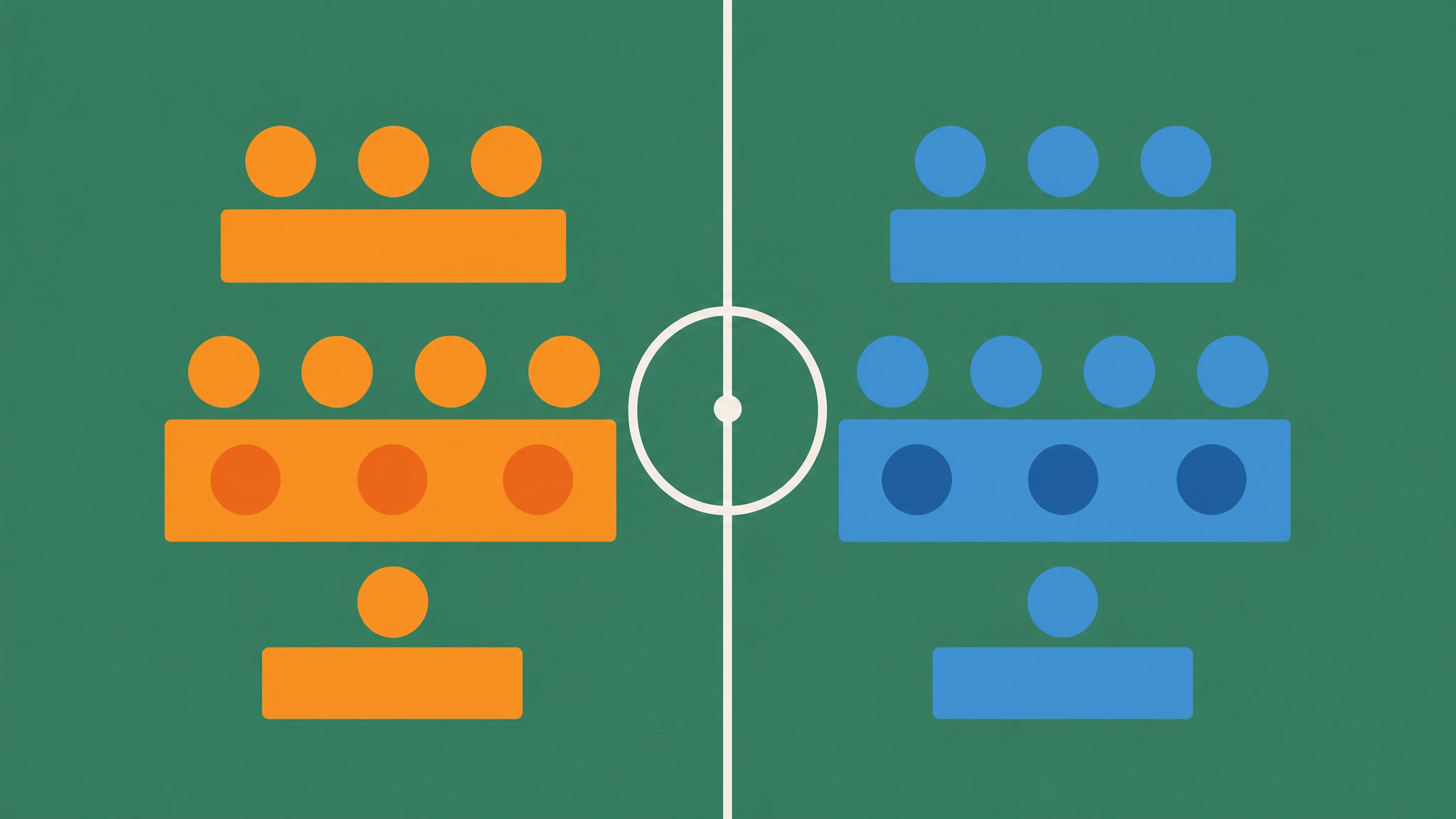
The automated team generator reads player profiles and builds sides that are mathematically fair, based on accumulated performance data. You can split players into fair teams in seconds, which removes the awkwardness of picking sides in public or private. That objectivity kills accusations of favoritism, so match outcomes come down to performance rather than who sorted the teams and how.
Algorithmic balancing also adjusts as players improve or decline, so competitiveness holds up across a season without you recalculating anything by hand. The system learns from results and attendance, and gets more accurate over time in a way a static spreadsheet never will.
Eliminating Skill Gaps in Pickup Games
Unbalanced teams kill retention. Blowouts bore the winners and demoralize everyone else. Competitive parity keeps engagement high, because every match feels meaningful until the final whistle. When players trust the teams will be fair, they commit more reliably and keep coming back knowing they'll get a proper game.
That consistency builds a stronger group than lineups an organizer curates from incomplete information. Players build rivalries and partnerships naturally through balanced competition, instead of getting stuck in the same mismatched games week after week.
Tracking Player Statistics and Season History
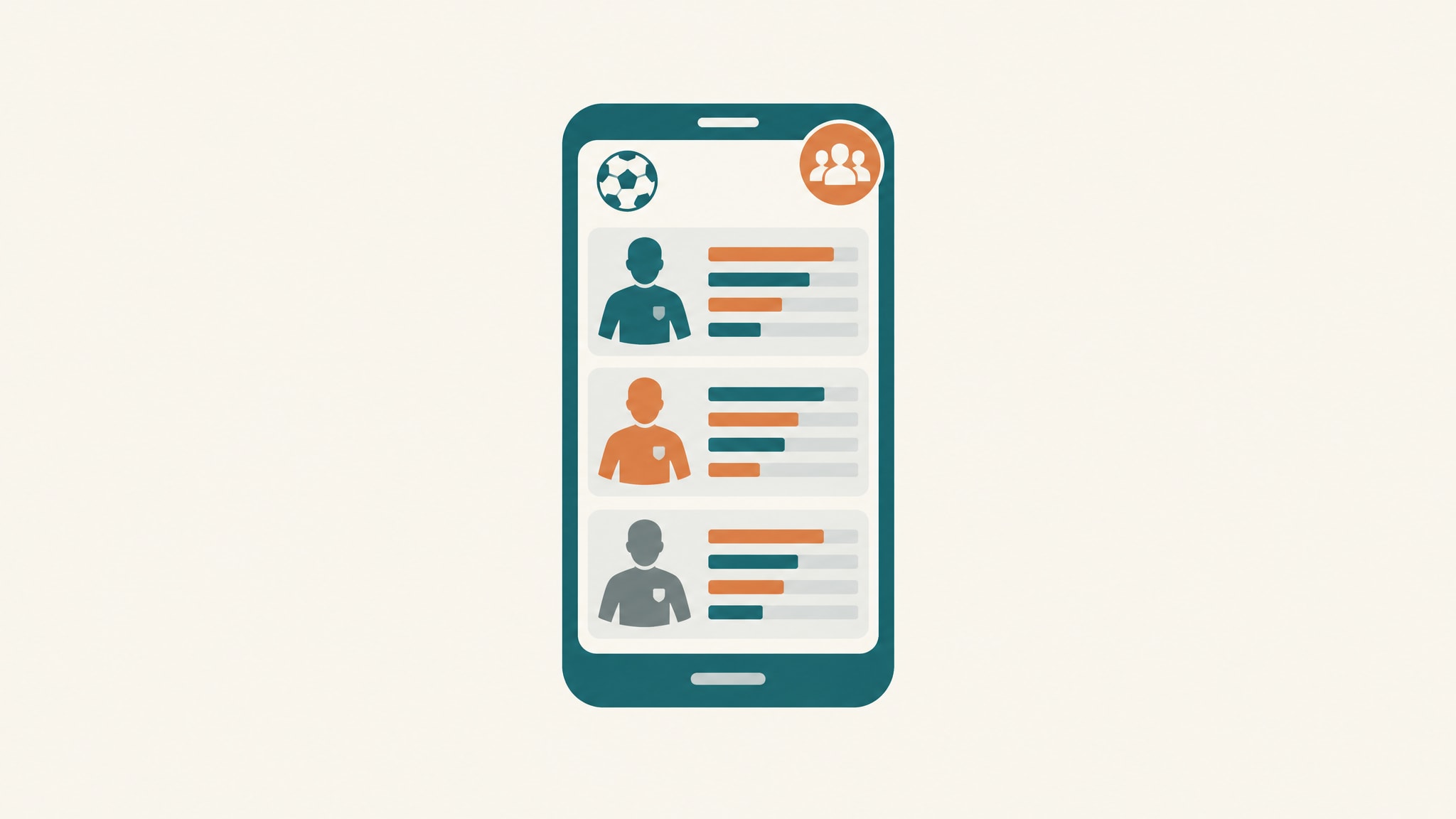
Persistent data tracking turns isolated matches into a season, not just a string of one-offs. Goals, assists, attendance streaks: all of it vanishes in chat logs, but it becomes something worth having once it's stored in a database built to track it over time.
Beyond Simple Attendance Records
Comprehensive stat tracking captures what a player actually contributes, not just whether they showed up. You keep accurate records of top scorers, the most consistent attendees, and the defensive stalwarts without updating a spreadsheet after every fixture. That history gives players real milestones to chase over the season.
Season history also does practical work when you're settling a dispute or planning next season's format. Past participation data informs decisions about promotions, awards, and format changes, based on what actually happened rather than what people remember happening.
Data-Driven Engagement for Recreational Leagues
Visible stats build healthy competition and get players personally invested in the group. People engage more when they can track their own progress against teammates and against themselves over time. This runs quietly in the background, so it boosts retention without asking anything extra of the players.
Investment in the group grows when people see their contributions recognized and kept. The platform becomes the institutional memory of your league. It cuts your admin work when someone asks about past results, and it strengthens the group through a shared statistical history.
Key Features of a Dedicated Football Group App
Evaluating a fix for WhatsApp football group problems means checking for specific capabilities that generic chat apps simply don't have. These are the non-negotiables that separate a purpose-built tool from an adapted messaging app:
- One-tap RSVPs that update roster counts instantly, with no text to parse.
- Automatic waitlists that fill vacancies with no organizer intervention.
- Roster caps that stop overcrowding.
- Integrated payment collection, so you skip the cash-handling awkwardness.
- Persistent player profiles that carry history across seasons.
These form the baseline for any serious replacement for a football team chat. Miss even one of them and you'll eventually fall back into the manual workarounds you were trying to escape.
Migrating Your Football Group From WhatsApp
Moving an established group takes care, because players are used to coordinating in chat. The setup work pays off fast: it removes the recurring weekly admin that eats your time.
Onboarding Players Frictionlessly
Simple signup flows work for players who aren't keen on learning a new system. Direct invitation links let people join in a couple of clicks, which keeps engagement up during the switch. Explain the benefit plainly and people come round faster, because you're solving a pain point they already feel every week.
Support during the migration stops people bailing when they hit an unfamiliar interface. Answer questions in the old chat for the first few weeks, and the switch goes a lot more smoothly.
Setting Up Your First Season
Getting set up properly the first time is what makes everything after it easy. Enter player ratings, set the match schedule, and configure notifications once, and you won't be redoing that work every week. That upfront effort is what players start to feel the benefit of almost immediately.
Early wins build confidence in the new system. Balanced teams and an accurate roster in the first few sessions is usually enough to win over the skeptics.
Choosing the Right Tool for Your League Size
A casual pickup game and a structured league with fixed seasons and playoffs don't need the same thing. Knowing your own requirements stops you overpaying for features you'll never use, or underinvesting and hitting a wall later. Scalability starts to matter the moment your group outgrows a free tier or the chat-based setup that worked fine when the group was smaller.
Check whether the platform handles what you need today and has room for reasonable growth. Finding better football team management software means matching the tool to your actual operation, not some hypothetical future version of your league. Look at what each tier includes before you commit, and check it against your budget.
The right choice comes down to how much admin you're carrying now and how much of it you want gone. You can view FootDraw pricing plans to compare options against your league size and what you're trying to fix.
Ready to organize your football team?
Build balanced teams, organize matches and track stats — all in one place.
Create Team