Season Stats Tracker for Amateur Soccer Teams
Use a season stats tracker for your soccer team to automate records. FootDraw replaces spreadsheets with accurate cumulative player data.

Organizing amateur football means accepting that the admin work often takes longer than the match itself. You spend hours chasing RSVPs in group chats and updating spreadsheets that break every time someone edits a formula on their phone. A dedicated season stats tracker for soccer teams replaces this friction with automated accumulation, giving you accurate records without the weekly data entry grind. FootDraw is trusted by over 1000 teams worldwide to replace spreadsheets and group chat chaos. It handles the cumulative history so you can focus on getting the game started on time.
Why Spreadsheets Fail at Season-Long Tracking
Manual data entry for season-long tracking introduces compounding errors that distort player ratings and team balance over time. One missed goal in week three or a deleted row in week seven creates a permanent gap in your records, and no amount of end-of-season reconciliation fixes it. You might trust your current system now, but shared sheets degrade as multiple organizers edit them from different devices during busy match nights.
Automated tracking closes the gap between what happened on the pitch and what gets recorded in your ledger. Instead of transcribing notes after the final whistle, you enter results once and let the software handle the aggregation across weeks and months. Amateur organizers don't have the administrative staff professional clubs employ to maintain data integrity, so that gap matters more for you, not less.
Spreadsheets also fail to connect attendance with performance in any meaningful way. You can track who showed up in one tab and who scored in another, but correlating reliability with output takes formulas most volunteer captains don't have time to build or maintain. When you ditch the spreadsheet for team management, you stop treating these data points as separate chores and start seeing them as connected inputs for better decisions.
The mental load of maintaining manual records builds as the season goes on. Early-season enthusiasm for careful tracking fades once fixtures pile up and injuries mount, and you're left with gaps in your data right when you need historical context most. Automated systems don't get tired or distracted. Your mid-season data stays as reliable as your opening week records.
Cumulative Player Stats App Features That Matter
A functional cumulative player stats app has to prioritize accuracy and accessibility over novelty features built for fantasy leagues. You need tools that respect the specific rhythms of amateur football rather than forcing professional analytics frameworks onto recreational play.
Automatic History Aggregation
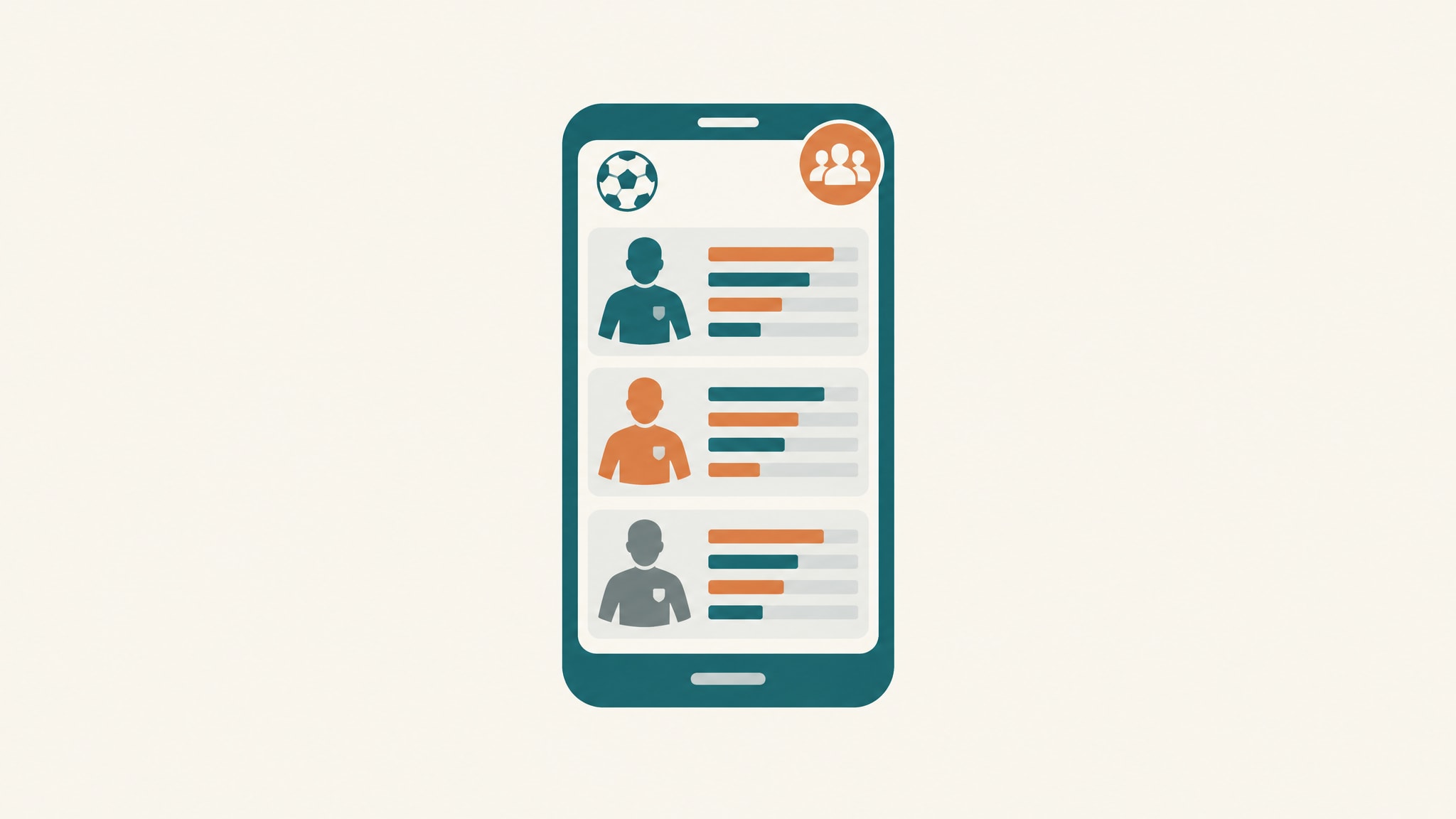
FootDraw automatically rolls up individual match data into season totals. No copying numbers between tabs, no rebuilding pivot tables after every fixture. The system takes raw match inputs and instantly updates career totals, seasonal averages, and streak metrics in the background while you manage the next game. Your historical record stays synced with reality even when post-match exhaustion makes manual updates feel impossible.
Aggregation also keeps context that static spreadsheets lose to formatting errors or accidental deletions. Every stat entry links back to its source match, so you can verify anomalies rather than guessing whether a sudden spike in goals reflects genuine improvement or a data entry mistake. You get full visibility into how the cumulative numbers were built without doing the calculations yourself.
Per-Match and Season Views
Toggling between single-game performance and long-term trends helps you tell hot streaks apart from sustainable improvement. A player might score four goals in one match because the matchup favored them, but only season-level aggregation shows whether that performance is a new baseline or a one-off. This dual view stops you from overreacting to individual results when you're setting the lineup.
Being able to drill down from season totals to specific matches also helps when players question their recorded stats. Showing someone their complete match-by-match breakdown builds trust better than handing them a total they can't check. Transparent numbers cut down on the friction that stat tracking often creates in social sports.
Tracking Season Stats Football Groups Actually Use
Amateur organizers typically track goals, assists, clean sheets, and attendance reliability rather than advanced professional metrics like expected goals. These basic stats directly inform the decisions you make about lineups, substitutions, and squad management, and none of it requires video analysis infrastructure or specialized coaching knowledge. Sticking to actionable metrics keeps tracking sustainable for volunteer-run groups.
Goals, Assists, and Clean Sheets
Basic offensive and defensive output remains the most useful measure for recreational team management because it maps directly to match outcomes everyone understands. Tracking these numbers across a season shows which players contribute consistently versus those who rely on the occasional big game. You can spot the reliable contributors who might not top the scoring charts but whose steady presence stabilizes your lineup week after week.
Clean sheet tracking deserves particular attention in amateur football, where defensive organization often matters more than attacking flair. Recording shutouts by goalkeeper or defensive unit helps you identify partnerships that work well together, which feeds future lineup decisions beyond just individual talent. It also gives recognition to defensive players who might otherwise go unnoticed on goal-centric leaderboards.
Attendance and Reliability Metrics
Reliability matters more than raw talent in pickup leagues, where last-minute cancellations wreck carefully planned formations. Tracking attendance as a first-class stat alongside performance data lets you weight availability properly when picking squads for important matches or tournaments. You stop guessing who will actually show up and start building lineups around proven commitment.
Attendance metrics also surface patterns that a simple headcount misses. A player who confirms early but cancels late causes more disruption than someone who declines up front, yet both might show identical attendance percentages in a basic tracker. Capturing confirmation timing and cancellation frequency gives you a reliability score that reflects actual organizational impact, not just presence.
This isn't a replacement for professional scouting or elite performance analysis platforms. FootDraw is built for amateur organizers managing recreational groups, not coaches chasing marginal gains through biometric monitoring or tactical video breakdowns.
Turning Match Data Into Team Balance
Cumulative history is essential for balancing teams fairly over a season, not just for individual leaderboards. Raw talent assessments based on reputation or recent memory bring in bias that accumulated performance data corrects with actual evidence. Your player stats tracker for amateur football becomes a fairness engine once it's connected directly to lineup generation tools.
Using History for Fair Lineups
Historical performance data feeds directly into balanced team generators that spread skill evenly across sides. Rather than relying on gut feel or outdated pre-season ratings, the algorithm weights recent form and long-term trends to create matchups where neither side has an overwhelming edge. You can balance teams by skill rating using evidence built up over dozens of matches instead of impressions formed during warmups.
This approach also accounts for positional versatility that simple rating systems miss. A player rated moderately overall might consistently outperform when assigned to defense, and historical data captures that nuance better than a static label. The generator learns from actual outcomes rather than fixed categories, and it gets more accurate as your dataset grows.
Reducing Skill Disparities Over Time
Persistent mismatches drain enjoyment from recreational football faster than anything else. When the same players dominate every session because organizers lack the data to justify redistribution, less skilled participants disengage and dropout rates climb. Season-long tracking gives you the evidence to adjust ratings with confidence and redistribute talent before frustration sets in.
Regular recalibration based on cumulative stats prevents the rating drift that plagues manual systems. Players improve, decline, or change roles throughout a season, and automated tracking catches these shifts faster than periodic reassessments do. Your team balance improves gradually instead of staying static until someone complains loudly enough to force an ad-hoc fix.
Soccer Season History App vs. Generic Tools
Generic fitness trackers and fantasy sports apps lack the persistent team management context amateur football needs. They're built for individual achievement or speculative entertainment, not the logistics of organizing recurring matches with real people. A dedicated soccer season history app pulls RSVPs, stats, and communication into one workflow instead of scattering your admin across several disconnected platforms.
Fantasy apps reset weekly and throw away the historical context amateur organizers need for long-term planning. Fitness trackers measure personal exertion without capturing the team dynamics that define group sports. Neither one addresses the real challenge: managing group participation over months of fixtures, where continuity matters more than isolated peaks.
Dedicated platforms also understand that amateur football runs on volunteer labor with little patience for complexity. Professional tools assume paid staff and institutional buy-in. Generic consumer apps assume individual motivation. Amateur organizers sit in the middle, needing real functionality delivered through interfaces built for part-time administrators juggling day jobs and evening fixtures.
Integration removes the sync problems that plague multi-tool setups. When your RSVP system talks to your stats tracker and both feed your team generator, you stop copying data between apps and start trusting one source of truth. That consolidation saves hours of weekly admin time, and it adds up across a season.
Setting Up Your Team Season Records App
Migration anxiety keeps a lot of organizers stuck with tools they already know don't work. Modern team season records apps cut that friction with import features and flexible setup that adapts to your existing league structure. You don't need to rebuild years of history from scratch, and you don't need to force your group into a rigid template built for a different format.
Importing Existing Rosters
Importing existing rosters from spreadsheets or previous platforms takes minutes, not days of manual re-entry. Bulk upload features accept standard file formats and map columns to the right fields automatically, keeping whatever historical data you've already built up. If you're wondering how fast you can move your team's records into a new platform, the answer is fast enough to switch mid-season without losing continuity.
Even a partial import gives you immediate value by setting a baseline roster that later matches build on naturally. You don't need perfect historical data to benefit from automated tracking going forward. Starting with your current squad list and letting the system build fresh history from your next fixture still beats manual methods by a wide margin.
Defining Custom Stat Categories
Different league formats need different tracking priorities, and rigid stat categories force awkward compromises. Configuration options let you define custom metrics for your specific competition without any coding or technical support. Five-a-side groups might track shots on target while eleven-a-side leagues focus on passing accuracy, and a flexible system handles both without cluttering things up with irrelevant fields.
Customization goes beyond adding new metrics; it extends to how existing ones calculate and display. Weighted scoring systems, position-specific leaderboards, and rolling average windows all adapt to local preferences that generic platforms ignore. Your tracking system should fit your league's culture, not the other way around.
You can view FootDraw pricing plans to weigh the cost against the weekly hours you're currently spending on manual admin.
Stop Chasing Data and Start Managing
Volunteer organizers deserve tools that cut the admin burden, not add another chore to an already demanding role. Automated season tracking turns data collection from a weekly obligation into a passive byproduct of managing the match, freeing up mental energy for the parts of organizing that actually need human judgment. The goal is spending less time recording football and more time running it.
Swapping chaotic group chat coordination for a structured workflow pays off immediately in less stress and a better experience for everyone playing. Players get consistent communication, accurate stats, and fair matchups without chasing organizers for basic information. Professional-grade organization becomes something amateur groups can actually use, through software built for exactly this job.
Your season deserves accurate records kept by a system built for amateur football's specific headaches. Sign up for FootDraw to automate season stats tracking and get back the hours currently lost to spreadsheet maintenance and message thread archaeology.
Pronto a organizzare la tua squadra di calcio?
Crea squadre equilibrate, organizza partite e monitora le statistiche — tutto in un unico posto.
Crea squadra