
How to Run a Small Amateur Football Tournament
Learn the practical steps to organise a small football tournament, from pitch booking and entry fees to matchday scheduling and results tracking.
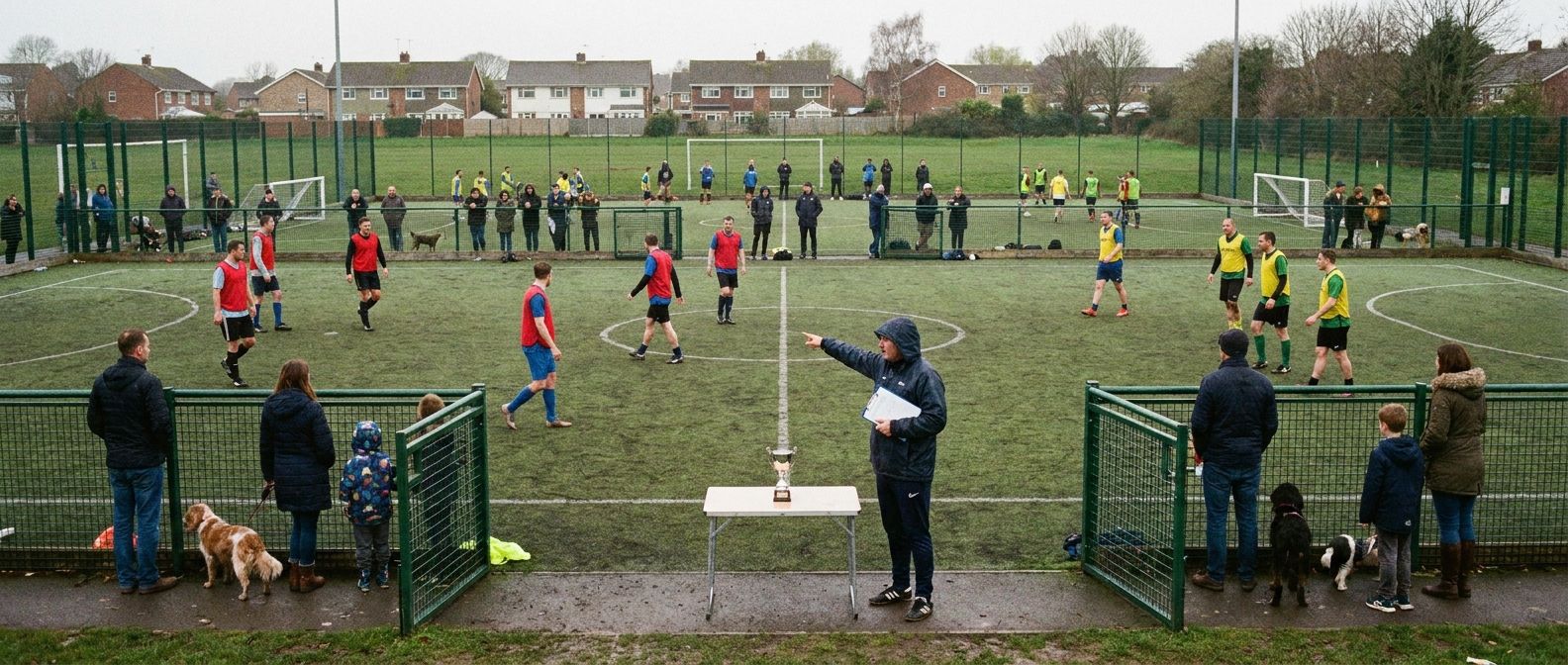
Table des matières
How to Run a Small Amateur Football Tournament
Organising a small football tournament is one of the most rewarding ways to bring a local community together. While large-scale events require massive logistics, a small tournament—such as a four-team round-robin or an eight-team 5-a-side afternoon—can be managed by a single dedicated organiser.
To run a small football tournament successfully, you need to shift your focus from playing to logistics. Success is measured by games starting on time and teams knowing where they need to be.
1. Planning the Timeline and Venue
Start your planning at least six to eight weeks in advance. The biggest bottleneck is always pitch availability.
When you book your venue, ensure you have enough space for warm-ups and team breaks between games. If you are running a 5-a-side tournament with eight teams, booking four pitches for three hours is often more efficient than booking two pitches for six hours. Short, high-intensity events usually have better attendance than all-day marathons.
2. Calculating Entry Fees and Budget
Before announcing the tournament, you must know your costs. A typical grassroots budget includes:
- Pitch Hire: The largest expense.
- Referees: Essential for preventing matchday arguments.
- Prizes: Trophies, medals, or a cash prize.
- Equipment: Match balls, bibs, and first aid supplies.
To set the entry fee, total these costs and divide by the number of teams. It is a good idea to add a 10% buffer to cover last-minute cancellations or unexpected equipment needs.
3. The Tournament Day Schedule
A clear tournament day schedule keeps the event moving. If one game runs late, the entire afternoon can collapse.
Build in a 5-minute buffer between games. This allows teams to swap over, refs to record the score, and the next group to get on the pitch.
Example 4-Team Schedule (Single Pitch):
| Time | Match | Pitch |
|---|---|---|
| 14:00 | Team A vs Team B | Pitch 1 |
| 14:25 | Team C vs Team D | Pitch 1 |
| 14:50 | Team A vs Team C | Pitch 1 |
| 15:15 | Team B vs Team D | Pitch 1 |
| 15:40 | Team A vs Team D | Pitch 1 |
| 16:05 | Team B vs Team C | Pitch 1 |
4. Recruiting Referees and Volunteers
Never ask players to referee their own tournament games. It almost always leads to bias claims and friction.
Reach out to local referee associations or ask experienced players from other groups to help. Offer a flat fee per game and provide them with water and a whistle. Having neutral officials is the fastest way to professionalise your event.
5. Results Tracking and Prizes
Keep your results tracking visible. A large physical scoreboard or a shared digital spreadsheet allows players to see the standings in real-time.
For small tournaments, simple metrics work best:
- 3 points for a win
- 1 point for a draw
- Goal difference as a tie-breaker
If you find that a team arrives short of players, you can use the FootDraw random team generator to pull in individual "free agents" and balance the squads fairly using 0-100 player ratings. This ensures the competition remains competitive even if the original squad lists change on the morning of the event.
6. Matchday Football Tournament Checklist
Use this checklist to ensure you don't forget the essentials on the day:
- Match Balls: At least two per pitch, fully pumped.
- Bibs: Two sets of different colours per pitch to avoid kit clashes.
- Whistles and Stopwatches: For the referees.
- First Aid Kit: Including ice packs and antiseptic wipes.
- Result Sheets: Clipboards and pens for recording scores.
- Water: Extra bottles for teams and officials.
- Prizes: Cleaned and ready for the presentation.
7. Managing the Prize Presentation
Keep the trophy presentation brief. Gather all teams immediately after the final game or the final round of matches.
In addition to the winning team trophy, consider a "Player of the Tournament" award. You can use match data or a quick vote from the referees to decide this. Recognising individual performance helps build a positive culture for future competitions you might run.
Prêt à organiser votre équipe de football ?
Créez des équipes équilibrées, organisez des matchs et suivez les statistiques — tout en un seul endroit.
Créer une équipe