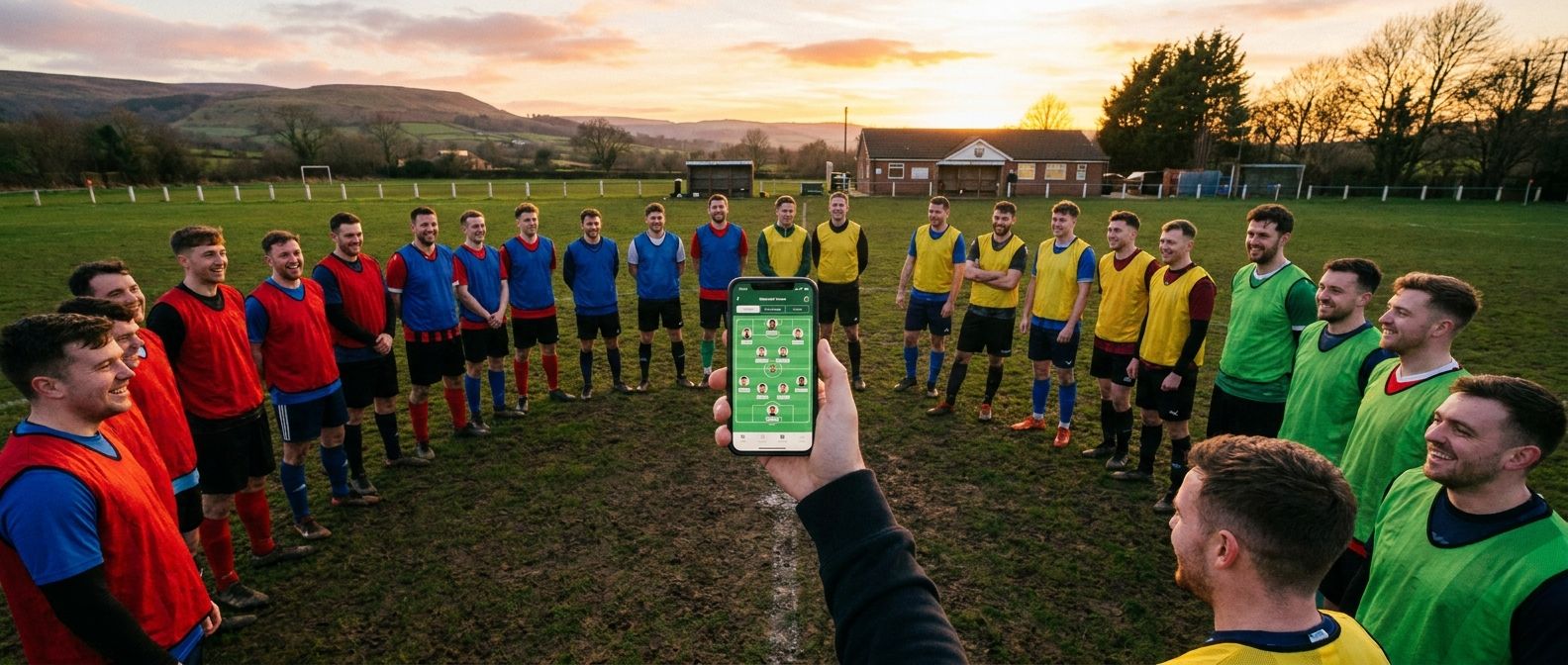
Science of the Split: How Rating-Based Team Generation Works
Discover the logic behind fair matches. Learn how rating-based team generators eliminate lopsided scores and keep your squad coming back.
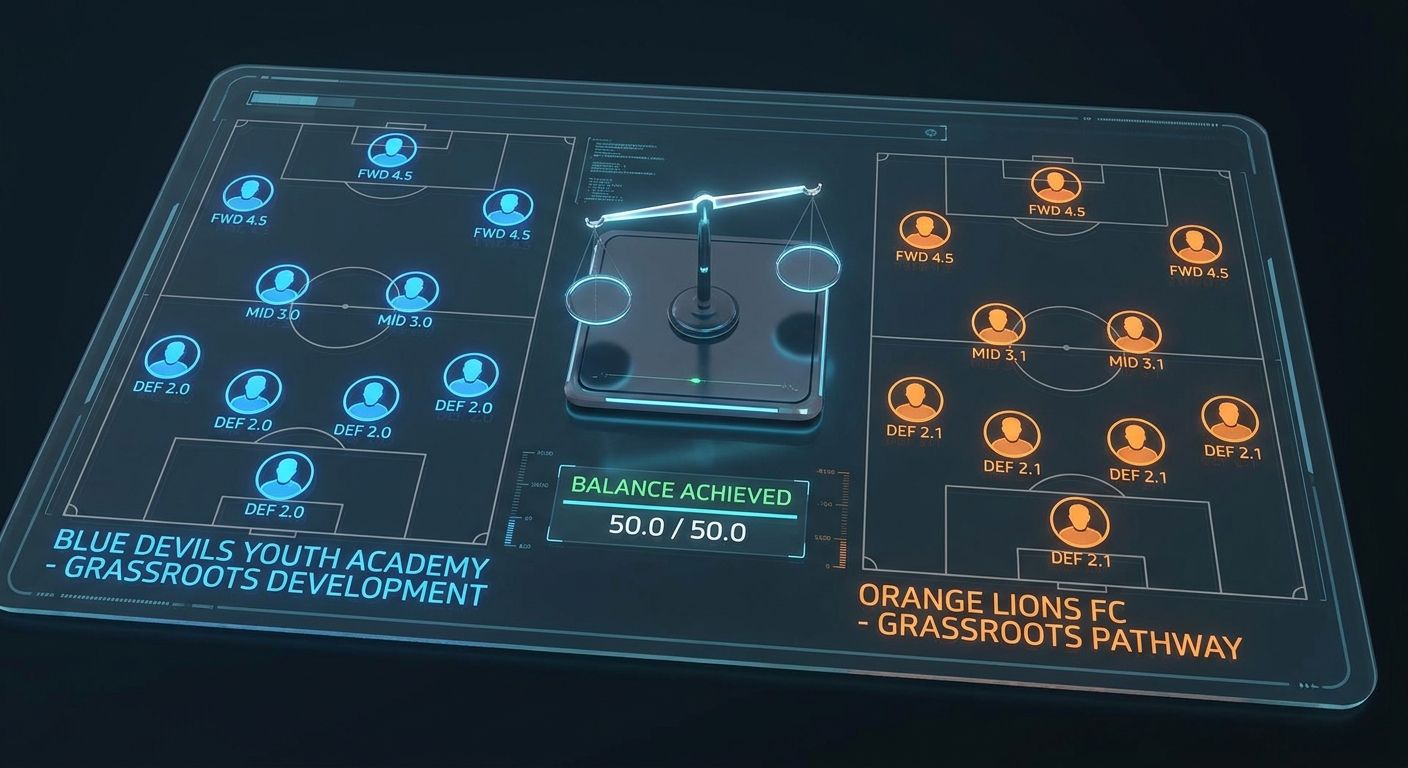
Table of contents
- 👋 Introduction
- 🔢 The Logic of Total Skill Value
- 📊 Defining the Rating Scale
- ⚙️ How the Balancing Algorithm Operates
- 🔄 Why Ratings Must Be Dynamic
- 🏆 Why Successful Teams Use FootDraw
- ❌ Common Mistakes That Limit Growth
- 💡 Growth Checklist for Amateur Football Teams
- ❓ Frequently Asked Questions
- How do I rate a new player I've never seen play?
- Should I tell players what their ratings are?
- Does this work for 5-a-side and 11-a-side?
- What if we have an odd number of players?
- 🎯 Conclusion
- 🚀 Try FootDraw for Free
Science of the Split: How Rating-Based Team Generation Works
👋 Introduction
Every organizer knows the sinking feeling of a 10-0 match.
Lopsided games kill the competitive spirit.
They lead to frustrated players and high dropout rates.
Rating-based team generation is the solution to this chaos.
It moves beyond random luck and biased picks.
In this guide, we’ll break down the logic of how balanced teams are actually made.
🔢 The Logic of Total Skill Value
At its core, rating-based generation is a math problem.
Each player is assigned a numerical value based on their ability.
The goal of the algorithm is to equalize the "Total Skill Value" of both sides.
If Team A has a total score of 45 and Team B has 44, you have a perfect match.
It ensures that high-impact players are distributed evenly across the pitch.
📊 Defining the Rating Scale
To make the system work, you need a consistent scale.
Most amateur teams use a simple 1-5 or 1-10 ranking system.
- 5 Stars: The match-winners who dominate the game.
- 3 Stars: The reliable, average grassroots players.
- 1 Star: Complete beginners or those with limited mobility.
Objectivity is the key to success here.
Ratings should be based on recent performance, not personal friendships.
⚙️ How the Balancing Algorithm Operates
When you click "Generate," the software performs hundreds of calculations.
It tests different player combinations in milliseconds.
It looks for the version of the teams with the smallest statistical gap.
The system often swaps a "4-star" and a "2-star" player between groups.
This iterative process results in a game where both sides have a fair shot at winning.
🔄 Why Ratings Must Be Dynamic
Static ratings are a common mistake in amateur football.
Players improve, get older, or return from injury at different levels.
A great system updates ratings based on match outcomes and stats.
If a "3-star" player consistently provides assists, their rating should climb.
This ensures your team selection stays accurate month after month.
🏆 Why Successful Teams Use FootDraw
FootDraw takes the manual labor out of these complex calculations.
It manages your player list in one centralized web app.
Players submit their RSVPs (Playing / Not Playing) early through the platform.
Once the lineup is set, FootDraw automatically generates balanced teams using your custom ratings.
It even tracks match history and stats like Goals and MVPs to help you refine those ratings over time.
❌ Common Mistakes That Limit Growth
- Emotional Rating: Rating your best mate higher than they actually play.
- Ignoring Position: Putting all the defenders on one team and attackers on the other.
- Manual Over-Tweaking: Changing the generated teams because of a "feeling."
- Outdated Data: Using ratings from three years ago for players who have slowed down.
💡 Growth Checklist for Amateur Football Teams
✅ Assign an initial rating (1-5) to every player in your squad.
✅ Use a centralized tool to collect RSVPs at least 48 hours before kick-off.
✅ Generate teams automatically to remove personal bias and arguments.
✅ Record the final score to see if the teams were actually balanced.
✅ Update ratings monthly based on goals, assists, and general performance.
❓ Frequently Asked Questions
How do I rate a new player I've never seen play?
Assign them a "3-star" (average) rating for their first game. Adjust it immediately after the match based on what you saw.
Should I tell players what their ratings are?
It depends on your culture. Many organizers keep ratings private to avoid hurt feelings, while others use them to spark friendly competition.
Does this work for 5-a-side and 11-a-side?
The logic is the same regardless of squad size. The smaller the group, the more impact a single rating error has.
What if we have an odd number of players?
The algorithm will still aim for the closest possible balance, though one team will naturally have a numerical advantage.
🎯 Conclusion
Balanced teams are the foundation of a thriving football community.
When matches are competitive, players are more engaged and reliable.
By understanding the science of ratings, you can professionalize your local kick-about.
🚀 Try FootDraw for Free
Stop wasting time on manual team selection.
Use FootDraw to collect RSVPs and generate fair, balanced teams in seconds.
Ready to organize your football team?
Build balanced teams, organize matches and track stats — all in one place.
Create Team