The Power of Football Player Profiles: Building a Smarter Amateur Team
Learn how detailed football player profiles transform amateur teams. Discover how tracking stats, attendance, and 0-100 ratings can professionalize your grassroots club.
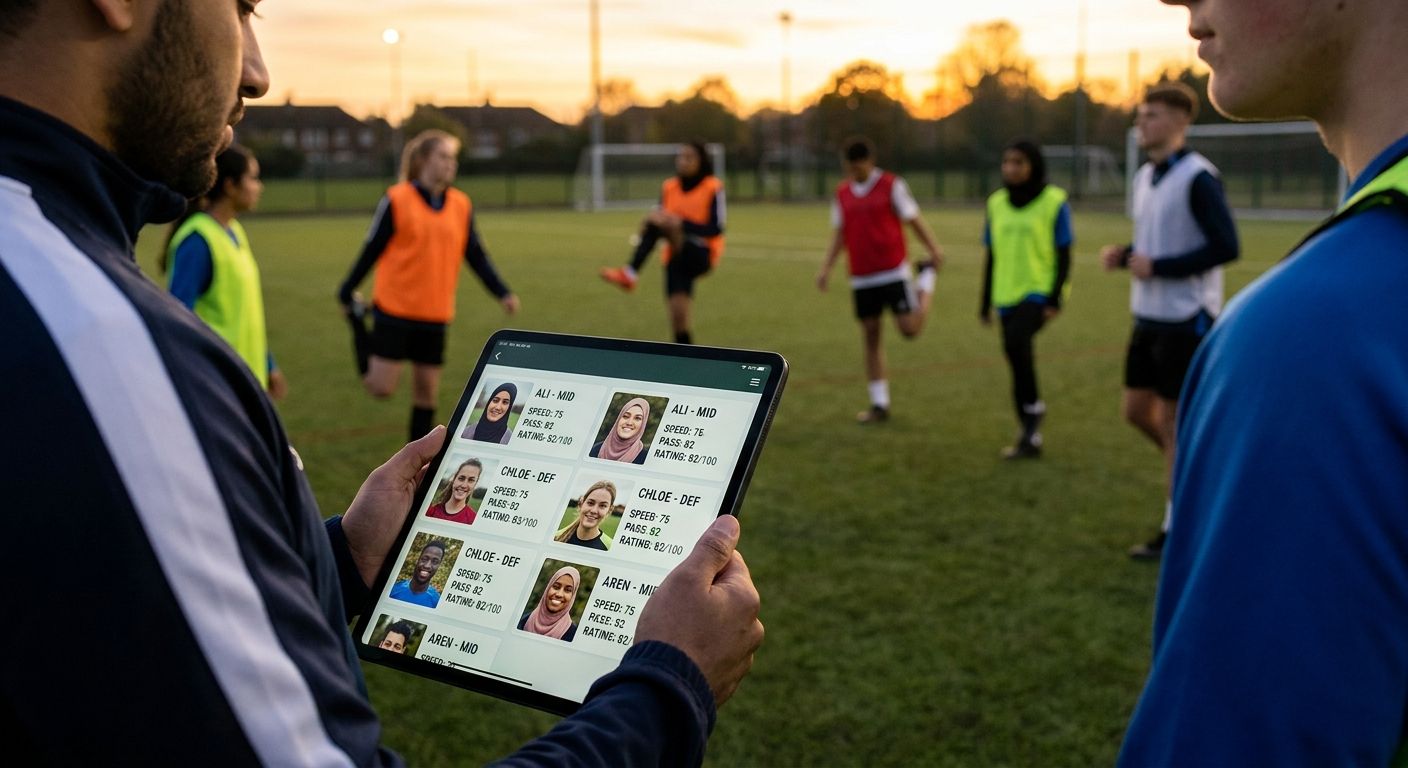
Table of contents
- 👋 Introduction
- ⚽ What is a Football Player Profile?
- Core Components of a Profile:
- 📊 The Role of the 0–100 Rating System
- 🏆 Tracking Match History and Milestones
- Why History Matters:
- 🤝 Community and Social Identity
- 🏆 Why Successful Teams Use FootDraw
- ❌ Common Mistakes That Limit Growth
- 💡 Growth Checklist for Amateur Football Teams
- ❓ Frequently Asked Questions
- 🎯 Conclusion
- 🚀 Try FootDraw for Free
The Power of Football Player Profiles: Building a Smarter Amateur Team
👋 Introduction
In most amateur teams, a player is just a name in a WhatsApp group.
You know they show up sometimes, and you vaguely remember they scored a header three weeks ago.
But without a central record, you are managing your team based on guesswork and gut feeling.
Professionalizing your grassroots squad starts with football player profiles.
By centralizing data like match history, goals, and ability, you turn a loose group of people into a real club.
⚽ What is a Football Player Profile?
In the context of amateur football, a player profile is a digital identity for every squad member.
It goes far beyond a simple contact list or a name on a spreadsheet.
A great profile captures the "DNA" of the player within your specific football community.
Think of it as a living document that grows as the season progresses.
Core Components of a Profile:
- Personal Info: Name and contact details.
- Availability Data: Their reliability over time.
- Ability Rating: A dynamic 0–100 player rating reflecting their current skill level.
- Performance Stats: Career goals, assists, and MVP awards.
- Historical Context: How long they have been part of the group.
Imagine a new player joins your Friday night game.
Without a profile, you have no idea if they are a former academy player or someone returning after a ten-year break.
A profile ensures everyone is on the same page before the whistle blows.
📊 The Role of the 0–100 Rating System
The heart of a functional profile is the rating system.
At FootDraw, we use a 0–100 player rating system to help organizers maintain competitive balance.
This isn't about being cruel or elitist; it is about ensuring games aren't lopsided and boring.
| Rating Range | Typical Player Description |
|---|---|
| 80–100 | Semi-pro level, high fitness, technically gifted. |
| 60–79 | Solid Sunday league player, reliable and experienced. |
| 40–59 | Casual player, average fitness, plays for fun. |
| 0–39 | Complete beginner or someone with physical limitations. |
When you assign a rating to a profile, you gain the power to generate fair games instantly.
This data allows you to track if a player is improving or if they need to be moved to a different group for a better experience.
🏆 Tracking Match History and Milestones
Player profiles are the foundation of football statistics.
When a player can see their own match history, they feel more connected to the club.
They stop being a "guest" and start being a "member" with a legacy.
Why History Matters:
- Retention: Players are less likely to quit if they are close to 50 appearances.
- Competition: Friendly rivalry over goal tallies keeps the intensity high.
- Recognition: You can easily see who deserves a "Player of the Month" award.
Track their winning and losing streaks to identify your "lucky charms" and your "strugglers."
This level of detail transforms a casual pickup game into a meaningful league-like experience.
🤝 Community and Social Identity
Grassroots football is 50% sport and 50% community.
Profiles help bridge the gap between strangers who only see each other on a pitch.
Seeing a player's profile allows others to learn names faster and acknowledge their contributions.
It creates a sense of belonging that a messy WhatsApp thread simply cannot provide.
When players feel valued through their profile, their commitment to the football attendance tracker increases naturally.
🏆 Why Successful Teams Use FootDraw
Managing profiles manually is a nightmare for a busy football captain.
FootDraw automates the process by giving every player a dedicated profile in one centralized web app.
- Centralized Database: Keep all player info away from chaotic chat histories.
- Dynamic Ratings: Easily update player ratings on a 0–100 scale to keep teams fair.
- Automated Stats: Track goals, assists, and MVPs with a few taps after the match.
- Visual History: Players can view their own profiles, stats, and match history anytime.
- Fair Selection: Use profile data to generate balanced teams in seconds.
❌ Common Mistakes That Limit Growth
1. Using Static Ratings Players improve or age over time. If you don't update their 0–100 rating, your team balancing will eventually fail.
2. Hiding the Data Players love seeing their stats. Keeping the "profile" secret from the players reduces engagement and motivation.
3. Ignoring Attendance Stats A player might be a 90-rated superstar, but if they only show up 10% of the time, they shouldn't be your priority.
4. Overcomplicating the Profile Don't try to track every pass or tackle. Focus on high-impact data like goals, assists, and overall rating.
💡 Growth Checklist for Amateur Football Teams
✅ Create a digital list of all current players.
✅ Assign an initial 0–100 rating to every squad member.
✅ Set up a system to record goals and assists after every game.
✅ Ensure every player has seen their own profile and stats.
✅ Use profile data to review player reliability once a month.
✅ Update ratings quarterly to reflect current form and fitness.
❓ Frequently Asked Questions
How do I rate a player I've never seen play? Start them at a baseline (usually 50) and adjust their rating after their first two appearances based on your observation.
Should players be able to see each other's ratings? Transparency can lead to healthy competition, but some organizers prefer keeping 0–100 ratings private to avoid ego clashes. Both methods work.
What is the most important stat to track? Attendance is king. A reliable player is more valuable to an organizer than a flakey striker.
Can I use player profiles for five-a-side? Absolutely. Profiles are even more critical in small-sided games where one unbalanced player can ruin the match for everyone.
How often should I update profiles? Match stats should be updated immediately after the game. Ratings should be reviewed every 5-10 matches.
🎯 Conclusion
Moving away from a simple name list toward detailed football player profiles is the biggest step an organizer can take.
It provides the data you need to ensure fair matches, high engagement, and long-term player retention.
By using a 0–100 rating system and tracking match history, you build a community that players are proud to join.
🚀 Try FootDraw for Free
Stop digging through WhatsApp to find player details.
Start building your squad's legacy today with FootDraw’s professional management tools.
Ready to organize your football team?
Build balanced teams, organize matches and track stats — all in one place.
Create Team