
How to Run a Football Match With 30+ Players: A Practical Guide
Organizing a football match with 30+ players requires more than just a ball and a pitch. Learn how to manage large groups using multi-pitch setups, rotation systems, and timed rounds.
Բովանդակություն
- Choosing the Right Pitch Setup
- Rotation Formats for Large Groups
- 1. The Multi-Pitch Round Robin
- 2. King of the Pitch (Ladder System)
- 3. Three-Team Rotation (Single Pitch)
- Essential Logistics for 30+ Players
- Bibs and Kit Colors
- Central Timing and Whistles
- Managing the Teams
- Handling Finances and No-Shows
- Common Mistakes to Avoid
How to Run a Football Match With 30+ Players: Rotation and Multi-Pitch Setups
When your weekly game grows beyond 20 players, the logistics of the session change completely. You can no longer rely on a single pitch or a simple substitution bench without leaving people standing in the cold for too long.
Organizing a football match with 30+ players effectively turns you from a captain into a mini-tournament director. To keep everyone engaged, you need a structured rotation system and, ideally, multiple playing areas.
Choosing the Right Pitch Setup
For 30 to 40 players, a single 11-a-side pitch is often the least efficient use of space. While it fits 22 players, it leaves 8–18 people on the sidelines.
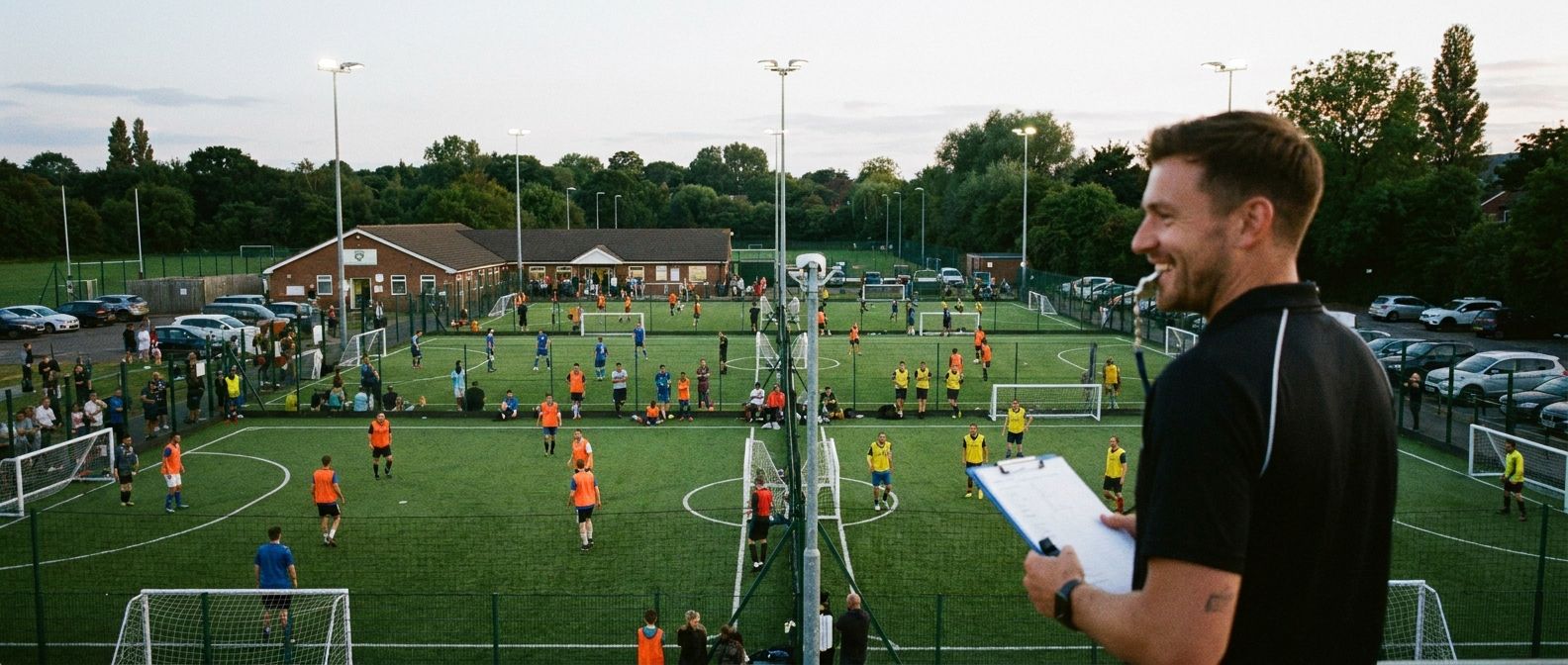
Instead, look for venues that allow you to split a large pitch into smaller zones or book multiple adjacent small-sided cages. Here are the most common configurations:
- Two 7-a-side pitches: Ideal for 28–32 players. This creates four teams and keeps everyone active simultaneously.
- Three 5-a-side pitches: Perfect for 30 players exactly. This allows for six teams of five, maximizing touches on the ball.
- One large pitch with rotation: If you only have one pitch, you must run a timed rotation where teams swap every 8–12 minutes.
Rotation Formats for Large Groups
To prevent the session from becoming chaotic, you must decide on a format before the first whistle blows.
1. The Multi-Pitch Round Robin
If you have 32 players and two 7-a-side pitches, split them into four teams of eight.
- Pitch A: Team 1 vs Team 2
- Pitch B: Team 3 vs Team 4
Run 15-minute matches. After each round, Team 1 moves to Pitch B to play Team 3, while Team 2 plays Team 4 on Pitch A. This ensures everyone plays different opponents and stays warm.
2. King of the Pitch (Ladder System)
If you have three pitches and 30+ players, you can use a "promotion and relegation" system.
Winners of the game on Pitch 2 move up to Pitch 1 (the "Champions Pitch"). Losers on Pitch 1 move down to Pitch 2. This creates natural competitive tiers and keeps games balanced throughout the hour.
3. Three-Team Rotation (Single Pitch)
If you have 30 players but only one 11-a-side pitch, split them into three teams of ten.
- Round 1: Team A vs Team B (Team C rests/referees)
- Round 2: Team B vs Team C (Team A rests)
- Round 3: Team C vs Team A (Team B rests)
Keep games short (10–12 minutes) so no one is standing still for more than a quarter of an hour.
Essential Logistics for 30+ Players
Bibs and Kit Colors
With four to six teams running at once, you cannot rely on "lights vs darks." You need at least four distinct sets of bibs. Use high-contrast colors like neon yellow, bright orange, royal blue, and red. Assign a "color captain" for each group to ensure the bibs are collected and accounted for at the end.
Central Timing and Whistles
When games are happening on multiple pitches, they must start and end at the exact same time. If Pitch A finishes three minutes early, they will be standing around waiting for Pitch B. Use a loud central whistle or a physical horn to signal the start and end of blocks.
Managing the Teams
With 30+ players, manually balancing teams on the day is a nightmare that eats into your pitch time. Use a random team generator to assign groups the night before.
If you use FootDraw, you can leverage the 0–100 player rating system to ensure that even with six different teams, the games remain competitive across every pitch. Sharing these lineups via WhatsApp or Telegram 24 hours in advance prevents the 15-minute "sorting out" period at the start of the session.
Handling Finances and No-Shows
Large sessions have high overheads. Booking three 5-a-side pitches is expensive, and three or four last-minute no-shows can leave you with a significant financial deficit.
- Pre-payment is mandatory: For groups this large, never accept "cash on the day." Use an app or bank transfer to secure spots 48 hours in advance.
- The Waitlist: Always maintain a waitlist. With 30 players, the statistical likelihood of someone having a work conflict or injury is high.
- Organizer Deputies: Do not try to manage 30 people alone. Assign one person to be the "Pitch Lead" for each area to handle score reporting and kit management.
Common Mistakes to Avoid
- Games that are too long: In a rotation system, 20-minute games feel like an eternity to the teams waiting on the sideline. Stick to 8–12 minutes.
- Ignoring the "Social" aspect: With 30 players, people can easily feel like a number rather than a club member. Try to rotate the teams between pitches so different groups mingle during the session.
- Poor Signage: If using a large sports complex, tell players exactly which pitch numbers you have booked. Don't let 5 people waste 10 minutes wandering around the wrong end of the facility.
Պատրա՞ստ եք կազմակերպել ձեր ֆուտբոլային թիմը:
Ստեղծեք հավասարակշռված թիմեր, կազմակերպեք խաղեր և հետևեք վիճակագրությանը՝ մեկ վայրում։
Ստեղծել թիմ